Norweco Singulair Green Explained in Simple Terms
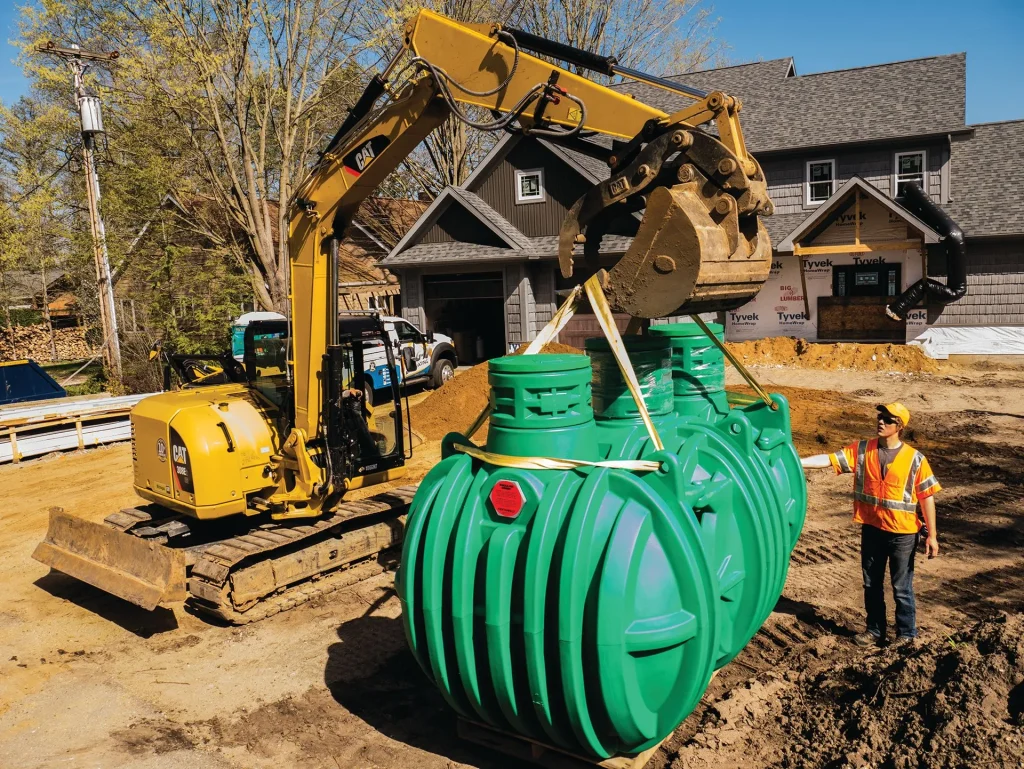
If you have been researching septic options and ran across the term norweco singulair green, there is a good chance you are trying to answer a very practical question: what is this thing, and why would someone choose it over a standard septic tank?
That is the right question to ask. A lot of wastewater equipment gets described with technical language that sounds impressive but does not help a homeowner, builder, or property manager make a real decision. What matters is simpler. You want to know what the system does, how it works day to day, what it needs from you, and where it fits best.
At its core, the Norweco Singulair Green is a residential wastewater treatment system. It is designed to clean household wastewater more thoroughly than a basic septic tank. Instead of just settling solids and sending partially treated water onward, it actively treats wastewater using aeration and biological action. In plain English, it works more like a small treatment plant than a passive tank in the yard.
That extra treatment matters in places where soil conditions are poor, lot sizes are tight, environmental standards are stricter, or a conventional septic setup simply is not a good fit.
The short version of what it is
A conventional septic tank mostly separates solids from liquids. Heavy material sinks, grease floats, and the middle layer moves out to a drainfield. Treatment happens, but a large share of it occurs in the soil beyond the tank.
A Singulair Green system pushes treatment further before the water leaves the unit. It introduces air into the wastewater and supports aerobic bacteria, which are the microbes that thrive when oxygen is present. Those bacteria break down waste more aggressively and more completely than the anaerobic process inside a standard septic tank.
The result is cleaner effluent leaving the tank. Cleaner effluent can reduce stress on downstream soil treatment areas and may be useful where regulations call for higher treatment performance.
That is the simple explanation. It is not magic, and it is not maintenance-free. It is a more active, more engineered system.
Why some properties need more than a basic septic tank
In the field, the biggest misconception I see is the belief that every rural or semi-rural property can use the same septic design. That is not how it works. Site conditions drive the decision.
A basic gravity septic system works best when the property has decent native soil, enough space for a drainfield, favorable groundwater separation, and room to meet setback requirements. Plenty of parcels do not check all those boxes.
Maybe the soil is heavy clay and drains poorly. Maybe groundwater sits high during wet months. Maybe the lot is narrow, near a lake, or constrained by wells, property lines, or topography. Sometimes local authorities simply require better pretreatment because the site is sensitive.
That is where systems like the norweco singulair green come into the conversation. They are often used because they provide a higher level of treatment before the water reaches the dispersal area. Cleaner water in means the soil has less work to do.
How it works without the jargon
The easiest way to understand the process is to picture wastewater moving through a few treatment stages inside one coordinated unit.
First, wastewater from the house enters the system. This includes water from toilets, sinks, showers, laundry, and the kitchen. Larger solids begin separating out, much like they would in a septic tank.
Next comes the big difference. The system aerates the wastewater. An air supply keeps oxygen in the treatment chamber, which encourages aerobic bacteria to grow and stay active. These bacteria are very effective at consuming organic waste.
After that biological treatment step, solids are allowed to settle, and clearer water moves on. Depending on the site design and local requirements, that treated water may go to additional components, a polishing step, or a dispersal field.
The important point is this: the Singulair Green does not just store or settle waste. It treats it.
What “green” usually means here
When homeowners see the word “green,” they sometimes assume it is just a marketing label. In many cases, the idea behind it is practical rather than decorative. A better-treated effluent can reduce environmental impact compared with sending less-treated wastewater into the soil.
That does not mean the system is automatically the best choice for every property, or that it somehow removes all responsibility from the owner. It means the design aims to improve treatment efficiency, especially where water quality protection is a priority.
On sites near lakes, streams, wetlands, or shallow groundwater, that can be a meaningful advantage. In jurisdictions with nutrient-sensitive watersheds, advanced treatment options may be encouraged or required.
The parts that matter to a homeowner
You do not need to memorize every internal component, but it helps to know the broad categories. Most owners are really dealing with a handful of practical pieces: the treatment tank itself, the aeration equipment, electrical controls, and the final dispersal or discharge setup approved for the site.
The aeration side is what sets this apart from a plain septic tank. Because the system depends on oxygen and active treatment, power matters. If you lose electricity for a short period, that may not be catastrophic. If the system sits unpowered for long stretches, treatment quality can suffer.
That is one of the trade-offs. A conventional septic tank has fewer active components. An aerobic treatment unit can offer better performance, but it asks more from the owner in terms of attention and service.
Where the system tends to shine
There are certain situations where a system like this makes immediate sense. I have seen advanced treatment units become the practical answer on difficult lots where a conventional system would have been oversized, heavily engineered, or simply rejected.
These are common scenarios where the fit is stronger:
- Small or constrained lots with limited drainfield area
- Sites with poor native soil or slow percolation
- Properties near water bodies or environmentally sensitive areas
- Homes where local code requires advanced pretreatment
- Replacement situations where an older septic layout no longer meets standards
That does not mean every difficult site should automatically get a norweco singulair green system. Design still depends on local code, loading, occupancy, seasonal use, and site evaluation. But these are the kinds of conditions that often push the conversation toward aerobic treatment.
What it feels like to live with one
For most homeowners, daily life with a properly installed and maintained unit is uneventful, and that is exactly what you want. Toilets flush, showers drain, laundry runs, and the system does its work in the background.
The ownership experience is different from owning a simple septic tank in two ways.
The first difference is awareness. You are more likely to have alarms, controls, or service indicators that tell you when something needs attention. Some people appreciate that because it provides early warning. Others find it intimidating at first. In practice, it is usually better to know about a problem quickly than to discover it after surfacing effluent or a failed drainfield.
The second difference is service. Advanced systems generally benefit from regular inspection and maintenance by someone familiar with the equipment. That might include checking the aerator, inspecting sludge levels, verifying airflow, and making sure the treatment process is functioning correctly.
Owners who prefer a completely hands-off approach sometimes struggle with this. People who are comfortable with routine upkeep usually adapt just fine.
Maintenance is not optional
This is where many purchasing decisions go wrong. People compare installation prices but ignore the long-term care profile. That is a mistake with any wastewater system, and especially with aerobic treatment.
A well-maintained unit can perform reliably for years. A neglected unit can become expensive, frustrating, and potentially noncompliant.
The routine work is not exotic, but it is important. Solids still need to be managed. Mechanical components still wear. Air delivery has to function. Effluent quality has to stay within the range the system was designed for.
Homeowners should expect some version of the following over time:
- Periodic professional inspection and service
- Pumping when solids accumulation warrants it
- Attention to alarms, breakers, or unusual noise
- Careful use of household chemicals and water load
- Prompt repair if the aeration or control system fails
One practical note from experience: many system failures begin as ignored small issues. A faint alarm, a tripped breaker that keeps happening, a blower that sounds rough, or soggy ground near the treatment area should never be treated as background noise.
The kinds of problems people run into
Most problems with advanced onsite systems are not mysterious. They usually trace back to one of four causes: poor installation, poor maintenance, misuse, or electrical and mechanical failure.
Poor installation creates trouble from the start. If the system is not sized correctly, set at the right elevations, connected to a suitable dispersal design, or installed according to manufacturer and local requirements, even a good product can underperform.
Poor maintenance is even more common. A homeowner moves in, does not understand what they have, skips service for years, then gets blindsided by a warning light or surfacing water. By then, the issue may involve both the treatment unit and the soil absorption area.
Misuse is a quieter but steady source of trouble. Flushing wipes labeled “flushable,” pouring grease down the sink, overusing bleach or disinfectants, or sending a huge volume of water through the system in short bursts can disrupt treatment.
Then there is the electrical side. Aerobic systems need power. If the blower, aerator, timer, or control equipment stops working, the treatment process can decline. That does not always show up immediately in the house, which is why regular checks matter.
Cost, and why there is no single number that fits every job
People often want a clean price comparison between a standard septic system and an advanced treatment unit. Real jobs are rarely that neat.
The installed cost of a norweco singulair green setup can vary widely based on local labor rates, site conditions, permitting, excavation complexity, the downstream dispersal method, electrical work, and whether the job is a new build or a retrofit. It is also affected by what the local health department requires. In one county, the package may be straightforward. In another, monitoring, sampling, or service contracts may be part of the package.
Operating costs also matter. You are not just buying a tank. You are buying a treatment process that uses electricity and benefits from ongoing service. Over many years, those recurring costs can outweigh the difference between two initial bids.
That said, the comparison should be fair. On some difficult sites, a standard system is not really cheaper because it may need substantial engineered work, imported media, elevated mounds, or larger dispersal areas. In that context, an advanced treatment unit may be economically sensible, not extravagant.
How to tell if it is right for your property
The best decisions usually happen when the owner asks a designer or installer a few grounded questions instead of chasing brand names alone. The brand matters less than the fit between the technology, the site, and the service support available in your area.
Ask what level of treatment the site actually requires. Ask how much area is available for dispersal. Ask whether there are seasonal groundwater issues. Ask what routine service looks like and who will perform it. Ask how often similar systems are installed nearby and whether parts and knowledgeable technicians are easy to access.
A good installer should be able to explain, in plain language, why this system was chosen over a standard septic tank or another advanced unit. If the explanation is vague or sounds rehearsed, keep asking.
Household habits that help the system work well
No treatment unit can compensate for careless use forever. The people living in the home have a direct effect on performance.
Try to spread out high-water activities instead of stacking them all into a short window. Three back-to-back loads of laundry, a long shower cycle, and heavy kitchen cleanup all at once can push a sudden hydraulic load through the system. A well-designed unit can handle normal family life, but moderation helps.
Be careful with antibacterial and harsh chemical products. Normal household cleaning is usually fine, but repeated dumping of strong chemicals can upset the microbial community doing the treatment work. The same goes for grease, oils, solvents, and non-biodegradable items.
Garbage disposals are another judgment call. They increase organic loading and solids, which can shorten pumping intervals and stress treatment. Some installers are comfortable with them if the system is sized accordingly. Others strongly discourage them. It is worth asking specifically rather than assuming.
The difference between “works” and “works well”
A point that gets overlooked in sales conversations is the difference between a system that merely functions and one that performs consistently over time.
Almost any properly installed system can look good in the first months. The better test is how it handles real occupancy, winter weather, power interruptions, service lapses, and changing household patterns over years.
That is why the support network matters. If you are considering a norweco singulair green unit, the quality of the local dealer, installer, or service provider may matter as much as the equipment itself. Reliable treatment depends on proper startup, owner education, scheduled checks, and timely repairs.
I have seen modest systems do well for years because the installer took time to explain them and the owner paid attention. I have also seen sophisticated systems underperform because everyone assumed the technology would take care of itself.
A few myths worth clearing up
One common myth is that advanced treatment units eliminate the need for pumping. They do not. Solids still accumulate and must be managed.
Another myth is that cleaner effluent means you can flush anything. You cannot. The treatment process is biological and mechanical, not indestructible.
A third myth is that alarms mean the system is poorly made. Not necessarily. An alarm often means the system is doing exactly what it should do, which is alerting you before a small issue becomes a major one.
And finally, some owners assume “advanced” always means complicated. The internal process is more involved than a basic septic tank, yes, but the owner experience does not need to be difficult when the system is installed properly and serviced regularly.
If you are buying a home with one already installed
This is one of the most important moments to slow down and ask questions. Buyers often focus on the roof, the furnace, and the foundation, while onsite wastewater gets a quick glance at best. That can be an expensive oversight.
If the property has a norweco singulair green system, find out its age, service history, permit record, and who has been maintaining it. Ask whether there is a current service agreement. Ask when it was last inspected and pumped. Ask whether any alarms, repairs, or code issues norweco singulair green Excavating New Jersey LLC have come up.
If records are thin, it is worth having the system evaluated by a qualified local professional before closing. That small step can save a lot of confusion later.
What simple terms really look like here
So if you strip away the product language and talk about it the way a homeowner would, the explanation is fairly direct.
The norweco singulair green is an advanced septic-style treatment system that uses air and bacteria to clean household wastewater better than a standard septic tank usually can on its own. It is often chosen for challenging sites or places with tighter environmental rules. It can be a strong solution when properly designed, installed, and maintained. It also costs more to own than a bare-bones passive tank because it uses electricity and benefits from regular service.
That is the trade. Better treatment, more oversight.
For many properties, that trade makes excellent sense. For others, a conventional system may still be the simpler and better choice. The right answer depends less on branding and more on the realities under your feet: the soil, the water table, the available space, the local code, and your willingness to maintain what you install.
When those pieces line up, a system like this can do exactly what you need it to do, quietly, reliably, and with a level of treatment that a standard septic setup may not be able to match.
Excavating New Jersey LLC
406 County Rd 565, Wantage, NJ 07461, United States
+1 973-791-4284
FAQ About norweco singulair green
How much does a NORWECO septic system cost?
The installed cost depends on the selected unit, engineering, site access, excavation, electrical work, disposal-field design and required approvals. A tank-only price is not a complete installation quote. Ask Excavating New Jersey LLC for a site-specific, itemized estimate that also explains ongoing service costs.
How does a Norweco septic system work?
The Singulair Green uses pretreatment, aeration, clarification and filtration to treat domestic wastewater. In the aeration chamber, oxygen supports bacteria that break down organic material. The Bio-Kinetic unit provides further filtration and flow equalization. Final effluent disposal must follow the property's approved design and applicable requirements.
What is the average lifespan of a septic system?
There is no guaranteed lifespan for every system. Design, installation, soil conditions, wastewater loading and regular maintenance all matter, and mechanical parts may need replacement before the tank. For a Singulair Green system, follow the manufacturer's service schedule and have a qualified provider assess its condition and pumping needs.